
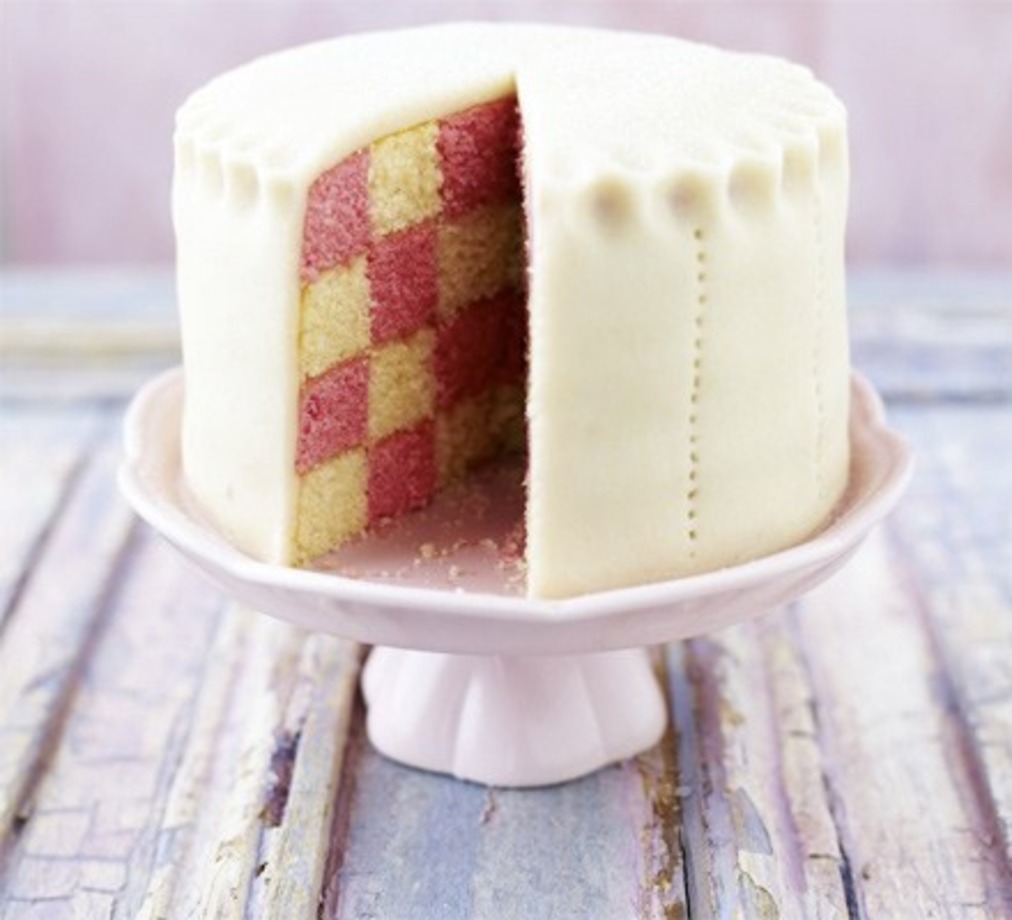
Imagine slicing into a cake and revealing a perfectly neat checkerboard of pastel pink and golden sponge, wrapped in a smooth layer of sweet almond marzipan. That’s the charm of the Battenberg Cake, one of Britain’s most visually iconic desserts.
Traditionally linked to British royal celebrations, Battenberg cake is often associated with afternoon tea culture and elegant gatherings. The cake is said to symbolize unity and harmony, with its four contrasting squares forming one beautiful structure. While it looks intricate and impressive, Battenberg cake is surprisingly approachable to bake at home.
Making Battenberg cake feels like combining baking with craftsmanship. The light vanilla sponge provides softness, the apricot jam adds a gentle fruity brightness, and the marzipan delivers a sweet almond richness that ties everything together. With patience and careful assembly, you can create a cake that looks straight out of a professional bakery.
Ingredients
For the Sponge Cake:
- ¾ cup (175g) unsalted butter, softened
- ¾ cup (175g) caster sugar
- 3 large eggs
- 1 ½ cups (175g) self-raising flour
- ½ tsp baking powder
- 1 tsp vanilla extract
- Pink or red food colouring
- 2 tbsp milk (if batter is thick)
For Assembly:
- About ½ cup (100g) smooth apricot jam
- 9–10 oz (250–300g) marzipan
- Icing sugar (for dusting and rolling)
Kitchen Tools
- 8-inch (20cm) square baking pan
- Parchment paper
- Mixing bowls
- Electric mixer or hand whisk
- Spatula
- Sharp knife or cake leveler
- Rolling pin
- Ruler (optional, for precision)
- Cooling rack
How to Make Battenberg Cake
1. Prepare the Batter
Preheat your oven to 350°F / 180°C (160°C fan). Line your square cake pan with parchment paper. If possible, create a divider using foil or folded parchment paper so you can bake both sponge colours at once.
In a mixing bowl, beat the butter and sugar together until pale, creamy, and fluffy. This step helps trap air, which gives the sponge its light texture.
Add the eggs one at a time, mixing well after each addition to maintain a smooth batter. Stir in the vanilla extract for flavor.
Gently fold in the flour and baking powder until just combined. If the batter feels thick, stir in milk to loosen it slightly.
2. Create the Two Colors
Divide the batter evenly into two bowls.
Leave one portion plain to create the classic golden sponge. Add pink or red food colouring to the second portion and mix until you achieve a soft pastel pink colour. Traditional Battenberg cakes use a subtle pink shade rather than a bright colour.
3. Bake the Sponge Layers
Spoon each coloured batter into separate halves of your prepared pan. Smooth the surfaces evenly.
Bake for 20–25 minutes, or until the sponge springs back when lightly pressed and a toothpick inserted into the center comes out clean.
Remove from the oven and allow the cakes to cool completely before handling. Cooling prevents crumbling during assembly.
4. Shape the Checkerboard Pattern
Place the cooled cakes onto a flat surface.
Trim the edges of both cakes so they form neat rectangles. Cut each coloured sponge into two equal long strips.
You should now have four strips total:
- Two pink strips
- Two yellow strips
Keeping the strips even in size helps create a sharp checkerboard pattern when assembled.
5. Assemble the Cake
Warm the apricot jam slightly so it spreads easily.
Arrange the sponge strips into two layers, using the jam as glue between each piece.
Bottom layer: Pink strip next to yellow strip
Top layer: Yellow strip placed over pink strip
Press gently to hold everything together while maintaining the pattern.
6. Wrap in Marzipan
Lightly dust your work surface with icing sugar and roll the marzipan into a rectangle large enough to wrap around the cake.
Brush the outside of the assembled cake with a thin layer of apricot jam. Carefully place the cake onto the marzipan and wrap it around, sealing the edges underneath.
Gently smooth the marzipan using your hands or a cake smoother for a clean finish. Trim off any excess.
7. Slice and Serve
Allow the cake to settle for about 30 minutes before slicing. Use a sharp knife and clean it between cuts to maintain the neat checkerboard pattern.
Serve slices with tea or coffee for a classic British-style treat.
Tips for Perfect Battenberg Cake
1.Soften butter properly — this ensures smooth creaming and better sponge texture.
2.Measure and cut carefully — even sponge strips create the signature checkerboard appearance.
3.Chill before wrapping — slightly chilling the assembled cake helps maintain structure while wrapping marzipan.
4.Use jam sparingly — too much jam can make the cake slippery or soggy.
5.Roll marzipan evenly — helps achieve a professional finish.
Fun Variations
1. Chocolate Battenberg Cake
Replace part of the sponge batter with cocoa powder to create a chocolate and vanilla checkerboard.
2. Lemon Battenberg Cake
Add lemon zest to the sponge and replace apricot jam with lemon curd for a bright citrus flavour.
3. Raspberry Battenberg Cake
Swap apricot jam for raspberry jam to add a slightly tangy fruit contrast.
Battenberg cake isn’t just a dessert, it’s a celebration of precision, creativity, and tradition. The contrast of colours, textures, and flavours creates a cake that is as enjoyable to look at as it is to eat.
Baking it fills the kitchen with the comforting aroma of vanilla sponge and toasted almond sweetness. And when you slice through that marzipan layer to reveal the neat checkerboard pattern inside, it delivers a sense of accomplishment that makes the effort completely worthwhile.
Whether served at afternoon tea, gifted during celebrations, or enjoyed as a weekend baking project, Battenberg cake proves that classic recipes remain timeless favorites.