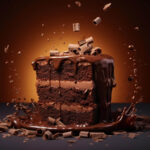

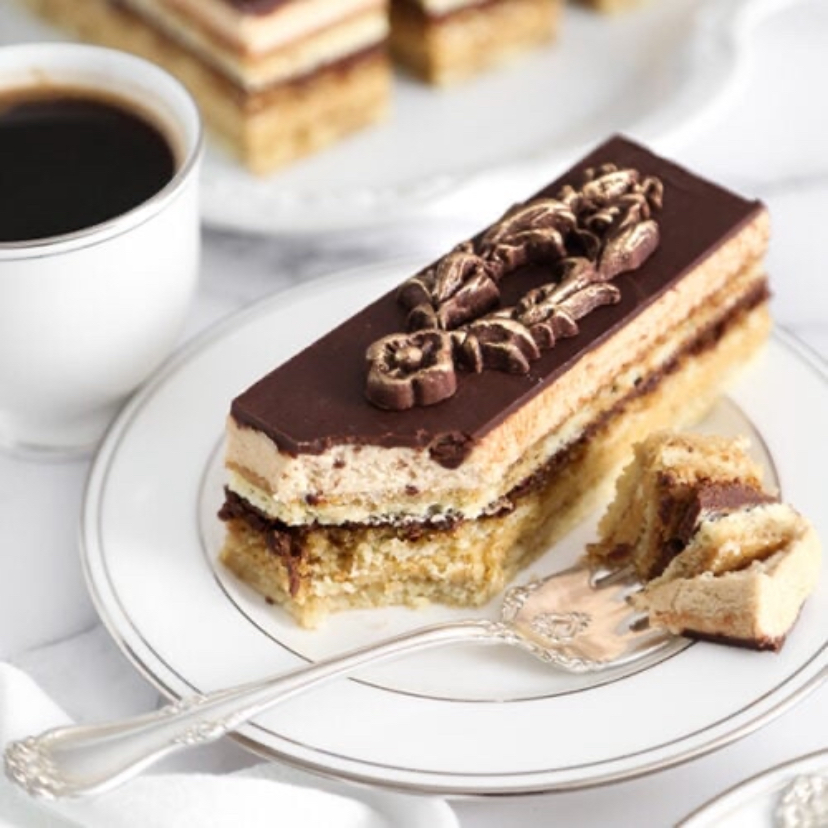
Picture this: you cut through glossy, thin chocolate ganache, delicate almond sponge, and rich coffee buttercream, revealing perfectly even layers. That first bite? A symphony of flavors, intense chocolate, subtle coffee, and buttery almond, that melts in your mouth with every forkful. This is Opera Cake, the elegant French masterpiece that’s as much a feast for the eyes as it is for the palate.
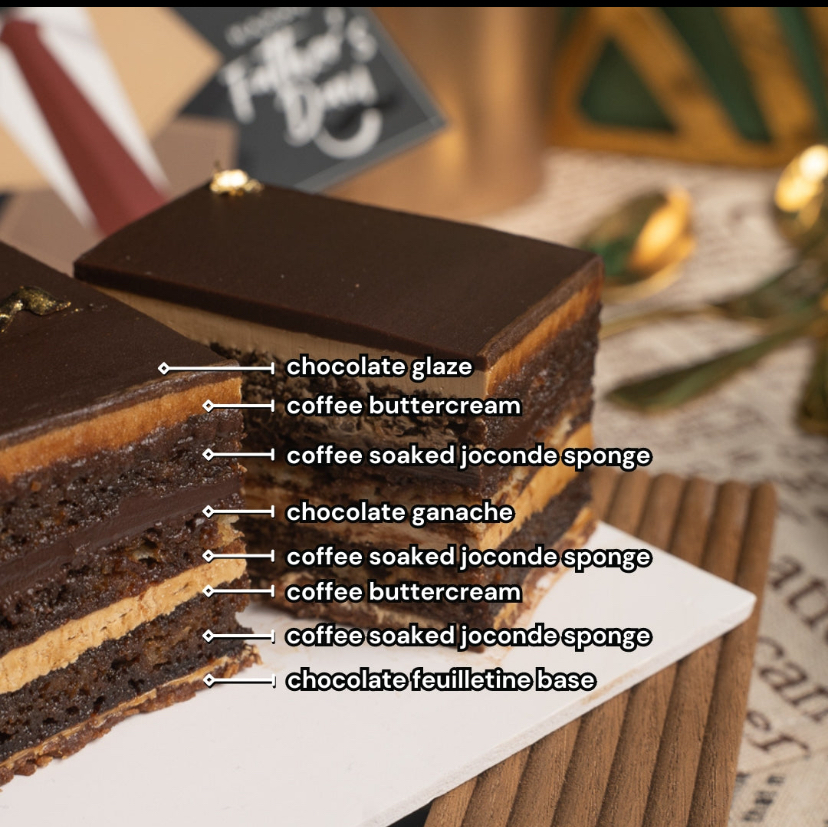
Originating in Paris in the early 20th century, Opera Cake is known for its precise layers: Joconde sponge soaked in coffee syrup, coffee buttercream, and dark chocolate ganache. It’s a showstopper at celebrations, impressive enough for gourmet desserts yet achievable at home if you follow the steps carefully. Let’s break it down so your kitchen becomes a mini Parisian pâtisserie.
Ingredients
For the Joconde Sponge (Almond Sponge):
- 6 large eggs
- 6 large egg whites
- 200g (1 cup) granulated sugar, divided
- 200g (2 cups) almond flour
- 60g (½ cup) all-purpose flour
- 60g (¼ cup) unsalted butter, melted
For Coffee Syrup:
- 120ml (½ cup) strong brewed coffee
- 60g (¼ cup) granulated sugar
For Coffee Buttercream:
- 200g (1 cup) unsalted butter, room temperature
- 100g (½ cup) granulated sugar
- 2 large egg yolks
- 2 tbsp strong brewed coffee
For Chocolate Ganache:
- 150g (5 oz) dark chocolate, finely chopped
- 150ml (⅔ cup) heavy cream
Kitchen Tools
- 10×15 inch jelly roll pan or rectangular baking pan
- Parchment paper
- Mixing bowls
- Electric mixer or whisk
- Spatula
- Saucepan
- Serrated knife
- Offset spatula
- Ruler (for precise slicing)
How to Make Opera Cake
1. Prepare the Joconde Sponge
- Preheat the oven to 220°C / 425°F. Line a jelly roll pan with parchment paper.
- In a large bowl, beat eggs and almond flour with all-purpose flour until smooth and slightly fluffy.
- In another bowl, whip egg whites with half the sugar until soft peaks form, then fold gently into almond mixture.
- Fold in melted butter carefully, maintaining airiness.
- Spread evenly in the pan and bake for 5–7 minutes, it bakes quickly, just until lightly golden.
2. Make Coffee Syrup
- In a small saucepan, combine coffee and sugar. Heat until sugar dissolves, then cool slightly.
- Brush the sponge generously with coffee syrup once baked and cooled slightly.
3. Prepare Coffee Buttercream
- In a double boiler, whisk egg yolks and sugar until thick and pale. Remove from heat.
- Beat in room-temperature butter gradually, then fold in coffee until smooth and creamy.
4. Make Chocolate Ganache
- Heat cream until just simmering and pour over chopped chocolate.
- Let sit for a minute, then stir until glossy and smooth. Cool slightly before using.
5. Assemble the Cake
- Cut the sponge into three even layers.
- Spread a thin layer of coffee buttercream on the first layer, top with second sponge layer, brush with coffee syrup.
- Spread another layer of coffee buttercream, then top with final sponge layer.
- Pour or spread chocolate ganache evenly over the top layer. Smooth carefully with an offset spatula.
6. Chill & Slice
- Refrigerate for at least 2 hours to set layers.
- Using a serrated knife, slice into rectangles for classic Opera Cake presentation.
Tips for Perfect Opera Cake
Thin, even layers – precision makes it elegant.
Use quality chocolate and fresh coffee – flavors shine through each layer.
Don’t overbake sponge – keep it light and tender.
Chill before slicing – ensures clean cuts and intact layers.
Optional glaze – pour a shiny mirror glaze for a professional finish.
Fun Variations
- Raspberry Opera Cake – Add a layer of raspberry jam for fruity brightness.
- Chocolate Espresso Opera – Enhance coffee buttercream with a teaspoon of espresso powder.
- Hazelnut Opera Cake – Replace almond flour with hazelnut flour for a nutty twist.
- Mini Opera Cakes – Bake in smaller pans or molds for individual servings.
Opera Cake is a dessert that combines artistry and flavor, every layer tells a story. It’s luxurious, impressive, and perfect for any special occasion. Once you taste that melt-in-your-mouth almond sponge with coffee buttercream and ganache, you’ll understand why this cake has remained a French classic for over a century.